Categories
This is me

This is me: Soccer

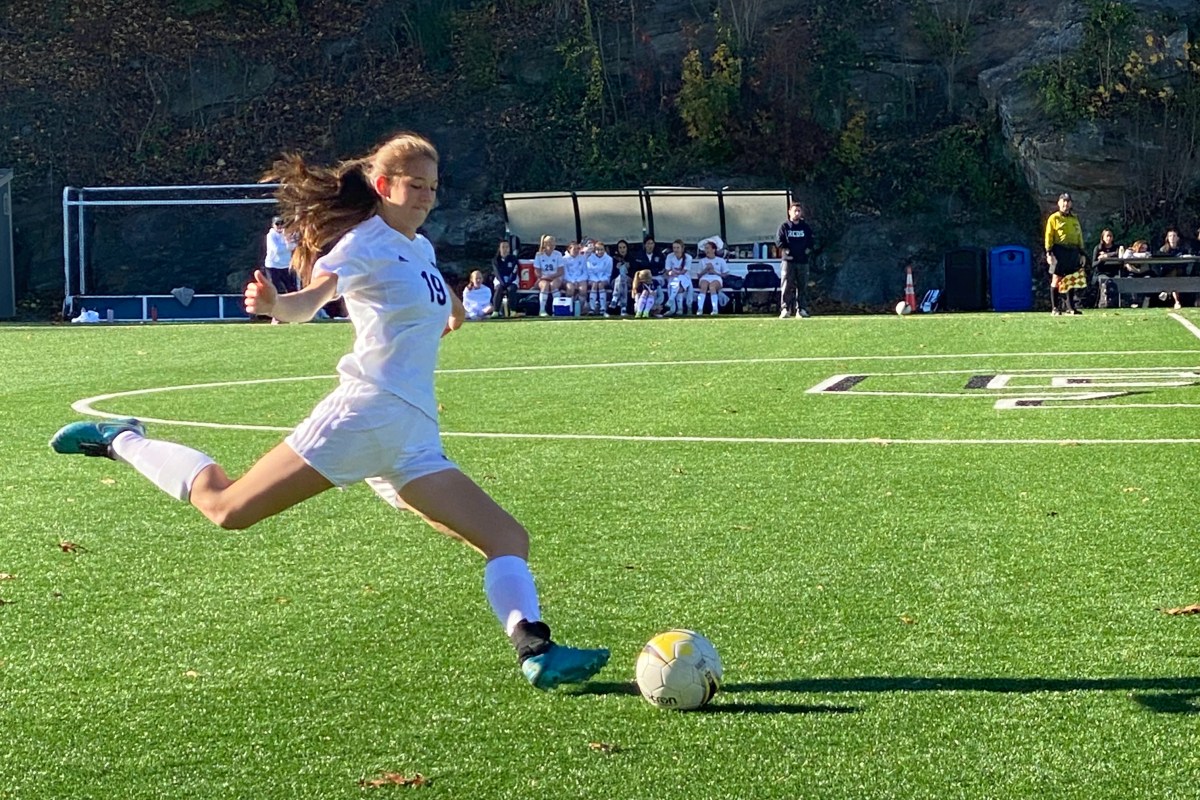
Thinking about soccer is bittersweet for me, as it had been a huge part of my life since I was young, but my memories of the end are tinged with uncomfortness and unhappiness.

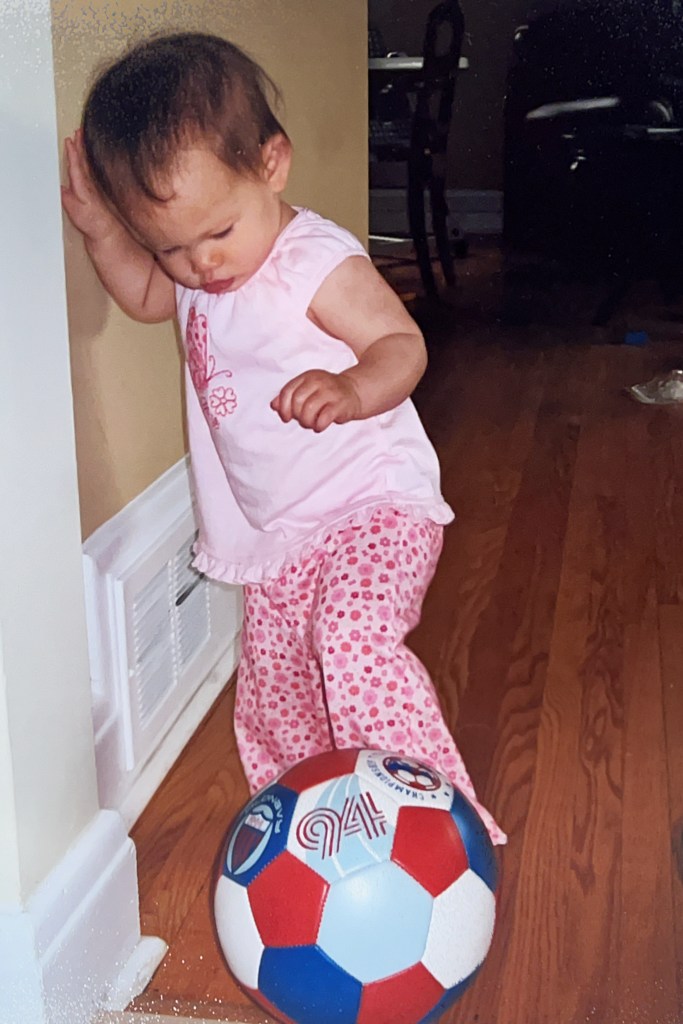
I began playing in a recreational league when I was four or five. It was just a bunch of small children running after the ball, trying to kick it, but I really loved it. When I was eight, I joined my first travel team as a midfielder, eventually switching to center defense. I honestly can’t remember much about my early days of soccer, but evidently I had enough fun to continue for years.

When I was 12ish, it became clear that I had outgrown the small team I was on and I switched to a more advanced regional team. The quality of play was much higher, even though I dropped down to my own age group, rather than playing a year up like I had done on my old team. I was happier with the soccer, definitely, but I was less comfortable with the people. Many of the girls on the team had been playing together since they were little, so it was hard to make friends. Plus, I would hate having to pretend to be interested in what they were talking about.

Our coach was very different from my previous coach, unfortunately not in a way that clicked with me. During games, my coach would stay quiet until we stepped off the field, then explaining what he noticed and telling us how to improve. My new coach would be screaming on the side of the field, trying to get us to listen while we were in the middle of a play. This style of coaching wasn’t compatible with me, as I usually tuned out any sound that wasn’t from the field. It was mainly to reduce distractions from the spectators, but it also blocked my coach’s voice.

After two years on that team, I left. The breaking point was during the winter season when I badly sprained my ankle. I had to drive 45 minutes to practice to sit and watch for a hour and a half before driving 45 minutes back home. This was three times a week and I wasn’t allowed to do homework while sitting on the side. It had definitely been building up for a while – I would dread going to every practice for a few months even before I got injured.

So I took a step back, went back to my old club and played with an okay team for a bit. I definitely needed the break from playing for such a highly competitive team, and this made me enjoy soccer again, though I was frustrated with the low level of play.

After just one season, my mum got a call from one of the parents on my old team (the higher level one) saying that a bunch of the girls were leaving the club and going to a new club. This club was pretty good, competitively, but didn’t have the toxic attitudes or such a burning need to win. So I went and played there – there was good competition, a good coach, and people I was familiar with. It was fun, but after a couple seasons the team kind of broke apart, at least in my eyes. People left because they weren’t satisfied with the level of play, or because they graduated (we were an ’03 and younger team, I’m an ’05), or because they moved. And we got new players, but I never really clicked with them. The majority of the team again starting having conversations that I just didn’t care about – talking about boys from nearby schools that they somehow all knew and gossiping about relationships. It was a perfectly valid thing for teenagers to be talking about, but I was never interested (maybe I should’ve read into that earlier than I did…).

At the end, the team got to the point where I wasn’t friends with 90% of them, and I didn’t even know some of their names. We all played for school during the fall, and when I showed up for some winter practices, there were about 10 people I’d never met. That’s when I stopped playing club soccer.

Although my club soccer journey was pretty tumultuous, school soccer was a lot more peaceful. I played on the middle school team in 7th and 8th grade, then made the varsity team for all four years of high school (to be fair, we weren’t really a sports school). I was friends with a bunch of the team who was one year older, and one of my best friends made the team all four years too, so I was a lot happier in terms of the people. The soccer was okay, not great, but I still had fun. A bunch of my friends also played on the guys’ team, so we would go support each other at home games.

My junior year I hurt my foot pretty badly – I had crutches and a boot. During playoffs, I was in the boot but still wanted to contribute. It’s kind of funny, looking back on it, but we played the number two seed and were tied most of the game. By the end of the game, my ankle was hurting really badly, even with the five Advil and multiple layers of taping on it (kids, don’t play while injured, especially when injured on one of the essential joints for your sport). We ended up losing – I couldn’t really sprint anymore, which left gaps that they took advantage of – but it was really funny when we were walking off the field and I saw the other team’s players, parents, and peers take a double take at the boot I walked off the pitch in (again, DO NOT do this, it is so not healthy).

I was elected as one of the captains my senior year, which was great. On the field, my words held more weight, which helped as my co-captain and I were pretty much the two most experienced players on the team. Off the field, it was a bit rougher, as neither of us were very social, so it was hard to cross the gap to the teammates who weren’t part of our friend group. We made it out fine, in the end.

I haven’t really played in university – maybe I’ll join the recreational league next year, try to replace the bed memories of the end with new, good memories, but honestly, this chapter of my life might be closed. Even though it sucks to give up something I grew up with, it’s not worth it if it doesn’t make me happy anymore.
Categories
Uncategorized

This is me: Puzzles

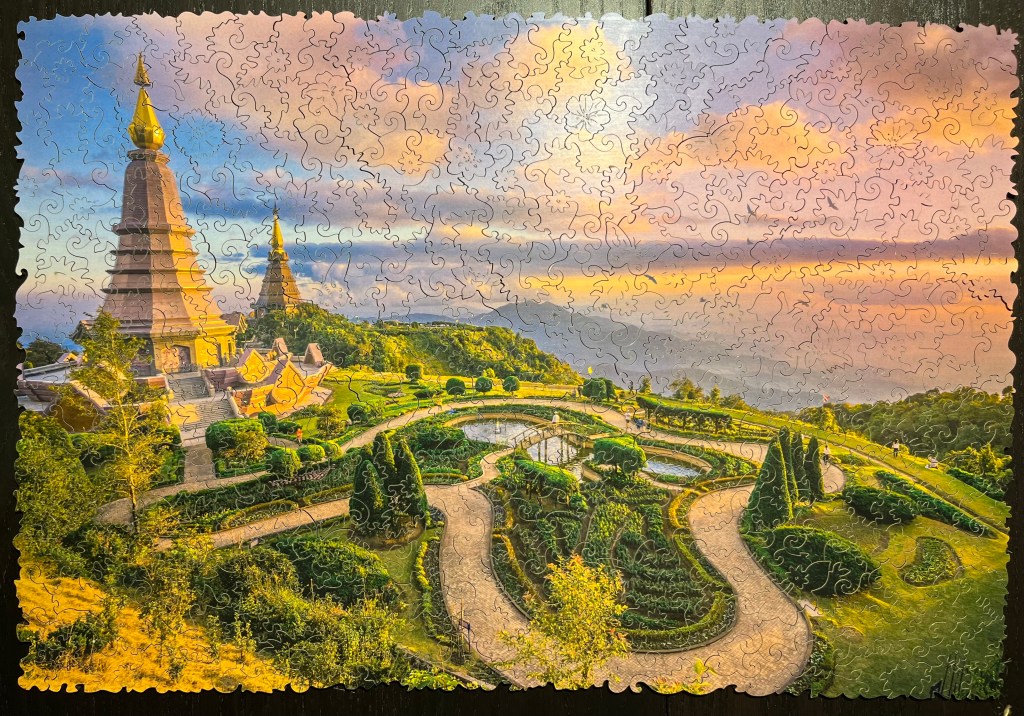
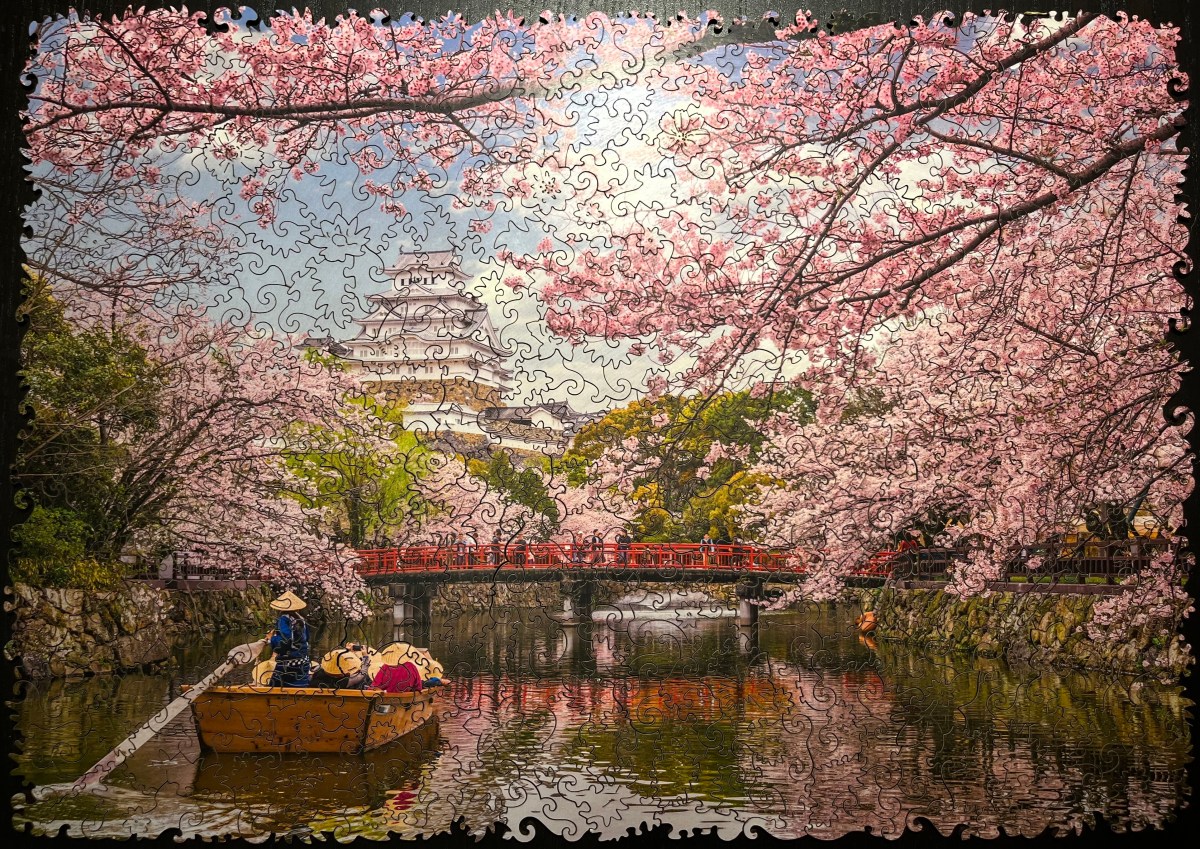
At first, the word “puzzles” only made me think of jigsaw puzzles, the ones you do on your kitchen table and lament at taking apart to clear up space. Those were the kinds of puzzles I’d been doing ever since I was old enough to put two pieces together.

I’ve developed a somewhat odd way of doing jigsaw puzzles, at least, that’s what my friends tell me. It starts normally, finding the corners and edges and putting that together. From there, some people will look for similar colors or parts of the same object or pieces that are close to the edge.

I simply pick up a piece and put it where it goes.

That makes it seem way more impressive than it actually is – I’m not some kind of psychic, nor do I have a photographic memory. I am, however, good at picking out little details from a piece and matching them to the image on the box. It’s a bit slow at the beginning, but the longer I spend on a puzzle, the more familiar I get with the image, and therefore the faster it is to identify pieces’ places.

There’s also something to be said about learning to choose pieces with distinctive features. If the piece depicts a feature that’s repeated in the exact or almost exact same way in multiple places of the puzzle, that’s probably a piece better left for later. A good place to start is usually living things, as they’ll almost definitely be distinctive.

Honestly, I’m kind of surprised that I haven’t met anyone who does puzzles the same way. I know this method only works for certain types of brains, but still. I’ve converted some of my family to this type of puzzling though, so I’ll count that as a win.

Of course, this only applies to jigsaw puzzles. I also love logic puzzles and escape games, which, while not being puzzles in and of themselves, contain lots and lots of puzzles. I think the first type of logic puzzle I ever played, like many, was sudoku. Eventually, I found samurai sudoku, a variation where there are five 9×9 grids, one in the middle and one connected to each of the four corners. Most of them are pretty hard, and I usually don’t finish them, but they’re really fun – I definitely recommend them if you’re looking to stick to sudoku but are getting bored with normal grids.

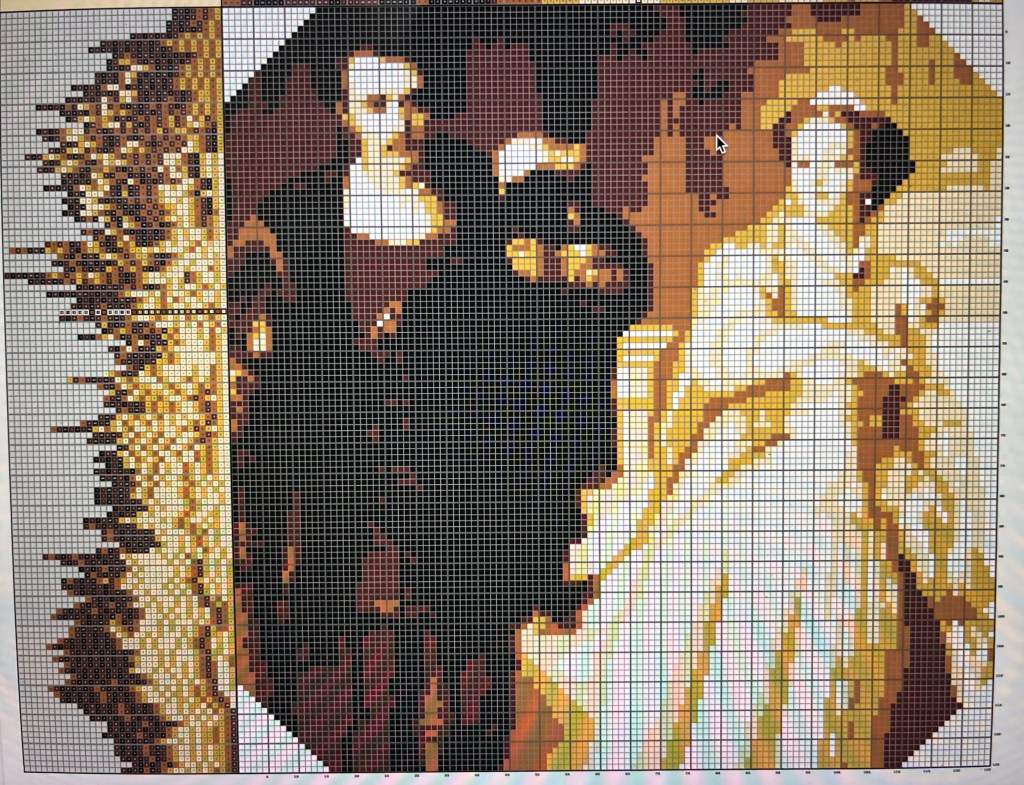
One of my favorite types of logic puzzles is nonograms, a number based grid puzzle that ends with a picture. Classically, nonograms are only in black and white – a square is either filled in or empty, but I enjoy nonograms that make use of colors. My crowning achievement thus far in nonograms is completing a 125×125 grid, which is the picture at the top of this post. It took me about 7 hours to finish, and the amount of times I had to recount the squares I colored in was honestly heinous. I was immensely proud when I was done, but I was also so ready to go back to my usual 45×45 grids.

The puzzle evenly matched with nonograms for the top spot in my heart is the logic grid puzzle, a variation of which (the same thing but without the grid) is found quite often in escape rooms. These are great because I don’t have to be on a device to do them – I have a book where each page is a new puzzle. This is super helpful for long plane rides and waiting for doctors’ appointments. Fun fact: my supplementary video for my college application was about logic grid puzzles. I think I completed five puzzles just for that video, but that was just me being picky. Anyways, it worked, I got into college, so obviously logic grid puzzles are great.

Moving on to escape games, the basic premise of which is usually that you (or your character) are locked in a room, a house, a lab, etc., and you need to escape. There’s a bunch of different mediums of escape games – board games, card games, video games – but my favorite is when you are actually within the game, surrounded by clues – commonly known as escape rooms. My aunt introduced them to me years ago, and by now I’ve done at least 30 rooms, probably more. It’s a tradition now – every time we go up to Toronto to visit we do an escape room. Quick shoutout to Omventure, a company that we always go to with incredible rooms. The immersive experiences and storylines that all escape rooms provide are incredibly fun, and the puzzles, while not always challenging, are a fun way to get your brain working.

Puzzles aren’t everyone’s idea of a great time, but they will always bring a smile to my face.

Categories
This is me

This is me: Taekwondo

Taekwondo surprised me in the best way, somehow blowing open the doors to my heart and quickly settling in to stay. In all honesty, I had expected Taekwondo to be a hobby that was discovered and discarded within a few months, just like so many others, yet it has easily become a major part of my identity.

I began Taekwondo in eighth grade – newly teenage and wanting to learn all the cool kicks I saw online. Well, if you didn’t know, they don’t start people at the cool kicks and sequences (gee, I wonder why), they start with basic stances and punches and kicks. The first thing I learned was a horse stance, because in warmups, you sit in horse stance to throw punches. And even though that wasn’t the coolest thing in the world, I was determined to figure it out. The tiny details matter to me – where exactly my hand has to end on a middle punch, the set of my shoulders, the direction my torso faces (fun note for all the math nerds out there: my first thought of how to write this was “the exact direction of the vector normal to my chest”). It was a puzzle and, well, if you’re reading these in order, you know I love puzzles.

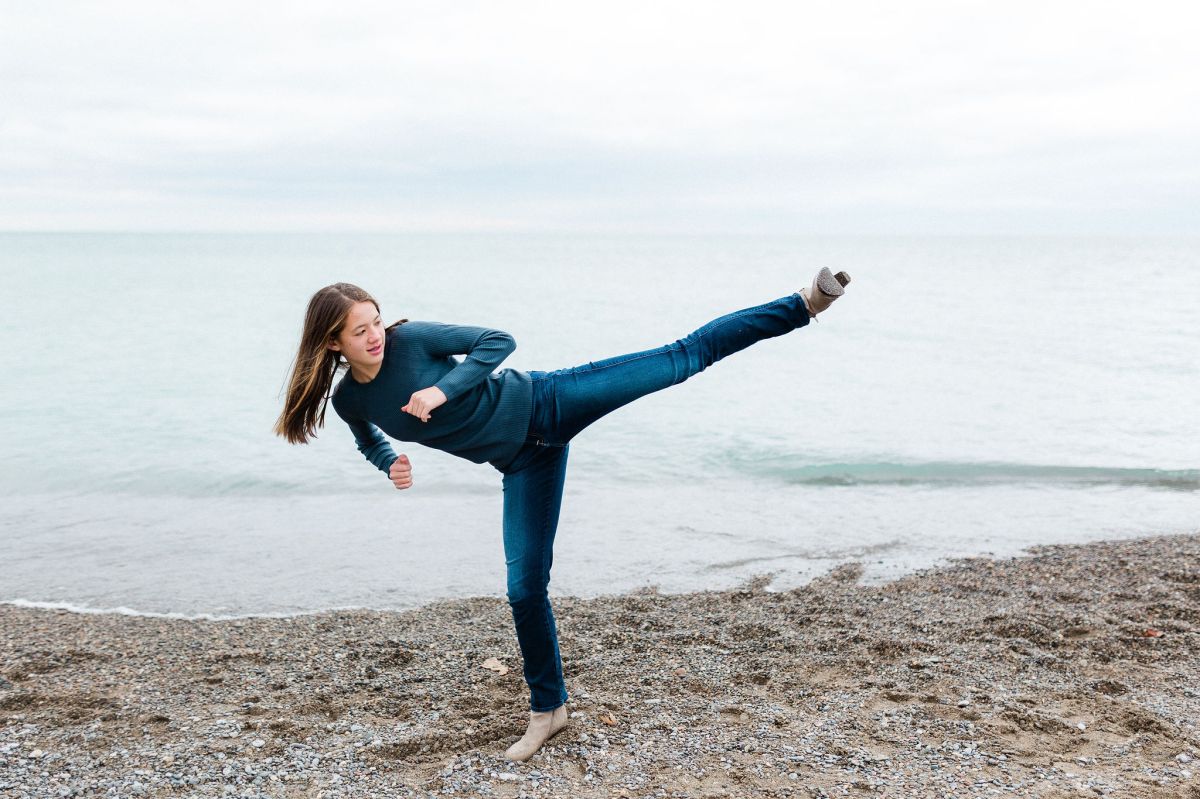
So I stuck with it. Horse stance turned to front stance and back stance and sparring stance and, most recently, walking stance. Middle punch turned to high punch turned to low block and the many, many upper body blocks and strikes. And I learned my first kick! A front kick. But that front kick turned into roundhouse kicks and side kicks and hook kicks and back kicks, and before I knew it, I was the person I saw online (not actually though, I usually don’t take videos of myself practicing).

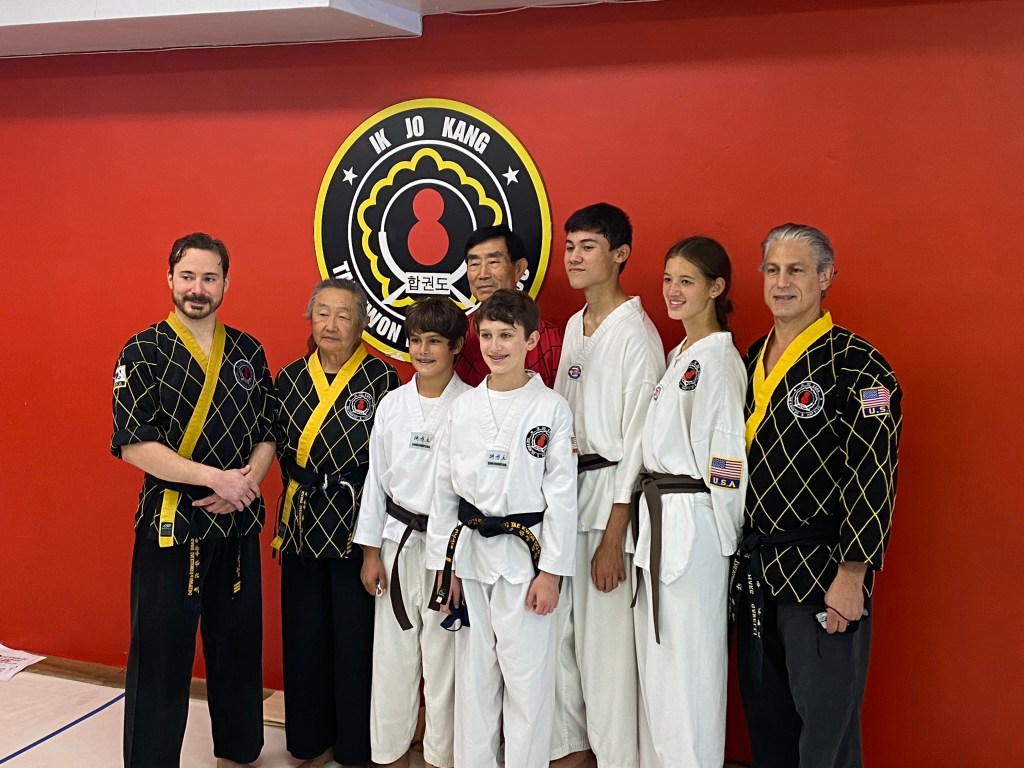
I earned my black belt in 11th grade, three and a half years after I first stepped on the dojang’s mat. Three and a half years of learning forms and movements, of learning to center my soul in my body, of learning to trust my teachers, my peers, and, eventually, myself.

I was, and still am, so incredibly proud of my black belt.

But a black belt isn’t the end of Taekwondo, just like graduating high school isn’t the end of learning. Anyone who says otherwise, to either of those statements, is simply incorrect.

For some people, getting a black belt is achieving their overarching goal, and therefore their road as a Taekwondo practitioner comes to an end. It’s an easy goal to set initially, and then the idea that a black belt is the crowning achievement is reinforced my society outside the martial arts world. No one will say “You’re a second degree black belt” with any more awe than they’d say “You’re a black belt.” After a black belt test is when you can separate the people who did it for the belt and the people who do it for the love of the sport.

Funnily enough, I had to take a break after my black belt test. I loved training, but there was a bit of a ‘too much, too fast’ feeling for me. I had gone from 0 to 100 very quickly, and I hadn’t let up at all. And, to be honest, there was still some of that “black belt is the top” mentality stuck in my head. I had to take a step back and ask myself if I had done it for the belt or if I had done it because I loved it. It was a mix of both, for me, but in the end I realized that even if part of me was going because I wanted a black belt, I still looked forward to, enjoyed, and was happy after every training I went to (what a different experience than the end of my soccer days…).

And now I’m here. I’m in university, training around 15 hours a week with my club team and helping the club as an Assistant Instructor. I earned my second degree through a grueling five hour test this past May. I’ve met amazing people and made incredible friends through the club, relationships that I know will last past graduation. So far, taekwondo has been a defining factor of my college experience.

And to think, it’s all because 13 year-old Sydney wanted to learn some cool kicks.