Categories
This is me Uncategorized

This is me: Photography

My photography journey began my senior year of high school, when I needed to take one more class to complete my arts credits. Photo 1 ended up being that last credit, and I liked it enough that Photo 2 followed.

My high school photography was okay, I think. Lots of practice, playing around with settings, and starting to develop a photographer’s eye for looking at the world. But I was invested, and my graduation present was a camera.

At first, I didn’t use my camera much in college. Adjusting to university life, keeping up with classes, and a couple clubs kept me busy. One of said clubs was Taekwondo, and I ended up using my camera for the first time that semester at a tournament in mid-November. The club likes having photos for record keeping, publicity, and just so that the members can have cool pictures of themselves, and I was super happy to contribute to that.

Let me tell you, my photos from that first tournament were utter garbage. Seriously, the combination of it being my first tournament, my first time seriously taking sports photos, no guidance on it, and the fact that we were hosting the tournament made for an incredibly overwhelming day. And incredibly shitty photos.

Taekwondo is not held in optimal lighting conditions, to say the least. We’re usually in a space too tall for the lights to be that effective and too large for any useful reflections off the walls. Putting that with me not being prepared at all, well, I got a bunch of dark, blurry, and incorrectly timed photos.

It wasn’t even just that the photos were bad, but editing them didn’t even occur to me. So I had about a thousand bad photos that were uploaded straight to the shared drive. On top of all that, I didn’t even sort them by person – didn’t even realize that was something that would help the club. I cringe a little looking back at it.

Luckily, I wasn’t the only photographer in the club. There were two others, a senior and a junior, whose photos I combed through and tried to imitate.

My next tournament, in February, I used burst mode and sorted the photos in the drive. At Nationals in April, I also edited them, basically copying the senior that I had grown closer to during the trip (PhanVan for the win!). There was a world of difference between my photos from November and April, and I will be forever grateful that my first year overlapped with two other photographers.

Stepping away from Taekwondo, I also like to shoot nature. It began with flowers, as they’re plentiful and relatively still. I’m especially proud of my picture of a dandelion.
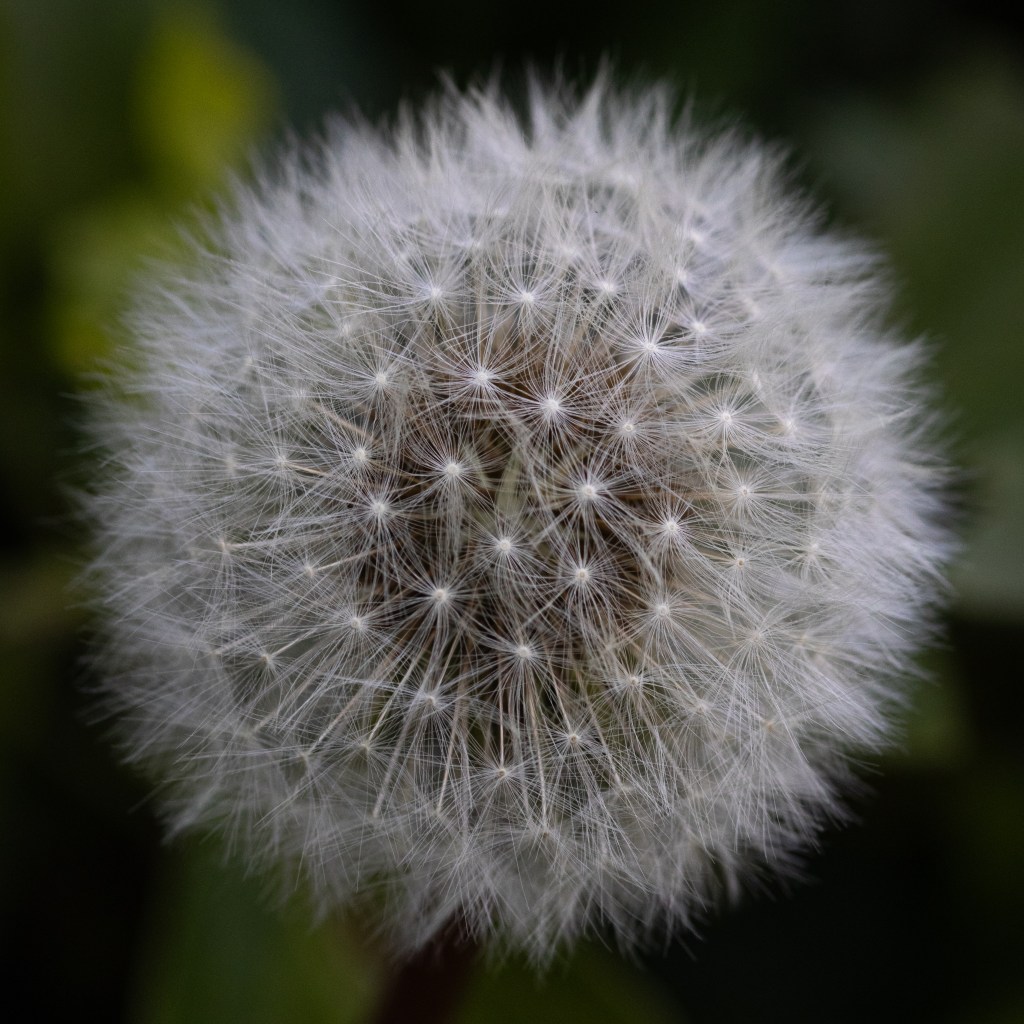
This was the first picture that made me think, “Hey, maybe I’m actually decently good at this.” I captured the thin threads in a way I didn’t think I could actually do, and the flower stood out from the backdrop of leaves just like in “real” photos.

It’s not perfect, and looking back at it I can see that I’d want to change my aperture, make the edges of the flower look a bit less like fur. But it holds a special place in my heart all the same.

Flowers are great, but they’re more of a step towards what I really want to take pictures of than the end goal. I want to shoot animals, maybe insects. Bring a subject off the page, but also show why it’s right where it belongs.

I’m also a bit partial to a dark green background, if it wasn’t obivous.
Categories
This is me

This is me: Sexual and Romantic Orientation

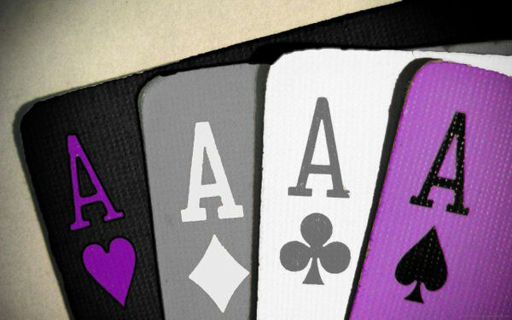
Exploring sexuality as an asexual person is quite an interesting experience. For me at least, it just didn’t matter for a long time. I never had to think about it because I wasn’t interested in a relationship or hookup. Even when I joined the GSA club in seventh grade, all the stories I heard were about a person being someone’s ‘gay awakening’ or them knowing for a long time that they liked people of the same gender, even if they never had a word for it. And I figured that if I didn’t have these experiences, then I was straight.

That wasn’t the case, evidently, but that is what growing up in a allonormative and heteronormative society will do. I’d say that most people don’t even know what the word ‘allonormative’ means. Just like people don’t really have to think about their heterosexuality if they’re straight, people don’t have to think about their allosexuality if they’re allo. Living in a world where you are the norm makes it unnecessary to think about what else there is.

And when you’re not the norm, it can be hard to recognize that unless you happen upon similar people’s experiences. So, I thought I was straight for a while. Then around ninth or tenth grade I thought I was bi because I realized that I didn’t like guys any more than I liked girls. But in eleventh grade, I realized that that was because 0 = 0.

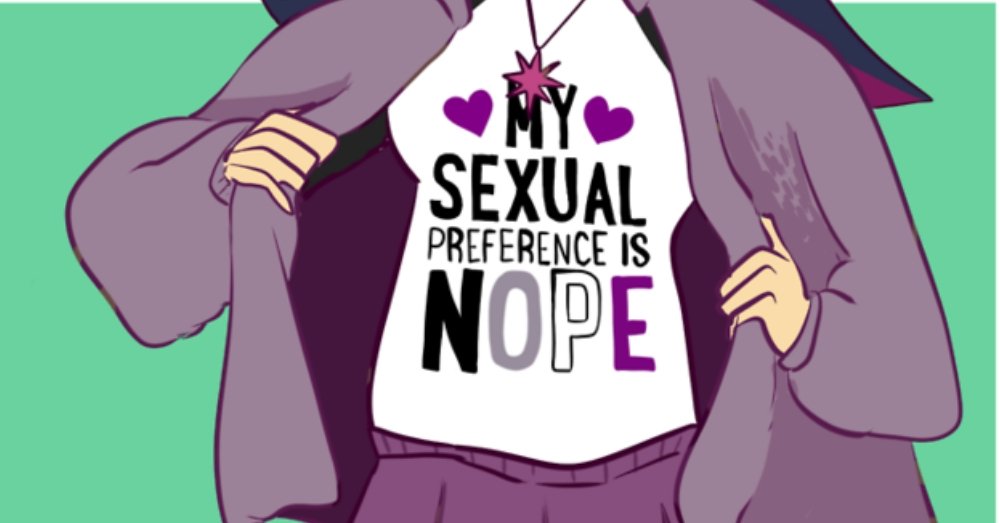
This is where the internet really stepped up. I learned about asexuality and a bunch of labels on the ace spectrum. For a bit, I was trying to find myself in a label more in the middle. Maybe I was demi, or gray-ace, or one of the many other identities that wouldn’t mean I was completely, one hundred percent different from the majority of the world. But eventually I concluded that nope, I’m asexual. And while we’re at it, I’m sex-repulsed.

It made a lot of sense once I thought about it. For the longest time, I thought sex was something people made up for movies and such, like laser cannons or talking cars or unicorns. How could it be a real thing that real people actually liked? It seemed gross and painful (still does, honestly). When I finally accepted that people do actually have and think about sex, the world became a very uncomfortable place to live in.

You see, I don’t want to be able touch sex with a fifty foot pole. I don’t want to be associated with having sex, with being sexy, or with wanting sex. And the fact that I am lumped into the group of people who do makes me feel uncomfortable in my own skin. I want to take everything on my body associated with it and just make it disappear. But I can’t do that, and I can’t control other people’s thoughts, so there’s no real solution (at least, that I’m aware of. If you think of something, let me know).

I’m not really sure why this has such a big impact on me. Maybe because it feels like I’m fundamentally different from so many others. Maybe because of how much sex and relationships are talked about in high school and college. Maybe it doesn’t need a reason.

Being aspec can be an isolating experience for some, as it’s harder to knowingly find other aspec people without explicitly discussing sexuality. I was lucky in that a couple of my high school friends are aspec, so it never felt like I had absolutely no one to relate to. Also, as I recently found out, the majority of my college friend group is aspec! It’s really interesting how we gravitated towards each other, even without knowing it at the time. My theory is that because we almost never talk about sex or romantic relationships, we find it more comfortable to be around each other than non-aspec people.

Simply due to allonormativity, I’ve been surrounded by conversations about hookups and physical attraction, but more than that, I’ve heard about crushes and romantic partners and dates. Romantic orientation is again something that many people don’t have to think about because it often goes along with sexual orientation. For me, it does; for others, it doesn’t. But even as an aromantic person, I’m not romance-repulsed. Orientation is about attraction, so I’ve never had a crush (what even is a crush?), but I don’t dislike the idea of having a partner.

I don’t know if this is a common aro experience, but it’s hard to imagine myself in a relationship without feeling some guilt. I know that aro people can be in romantic relationships just like ace people can have sex, but I wouldn’t feel for them what they feel for me (assuming they’re alloromantic). Even if I love them in a non-romantic way, I feel like I’d be depriving them of being loved in a way that they might want. And this is an issue that I would not bring into a relationship. Also, I’ve seen that when people get into a relationship, their friendships tend to suffer. Not on purpose, but people will want to spend more time with their partner, often at the expense of time with their friends. I value my friendships so much, and they already fulfill everything I could want.

I’m perfectly happy being single and not mingling.

Categories
This is me

This is me: Kpop

Diving into Kpop has been such an adventure for me. I first started listening in early 2020 because of a soloist named AleXa, who had debuted only a couple months prior. I don’t remember how her music video for Bomb showed up, but it hooked me from the start.

It was the start of a rabbit hole, and I tumbled in without noticing how deep it went. AleXa, BLACKPINK, and BTS were my introduction to the Kpop world – the artist who had showed me the genre and the two biggest acts globally.

The whole Kpop culture was quite odd to me at first. I was someone who was pretty oblivious to pop culture, and I guess I still am, to a lesser extent. I focused more on the product – the song, the movie, the TV show, etc. – than the people in it. If you showed me a celebrity’s picture, odds are that I wouldn’t be able to name them, which is why I was taken aback at the culture of knowing tons about the idols. It seemed unnecessary and invasive, which, in some ways, it is, even more so than American celebrities.

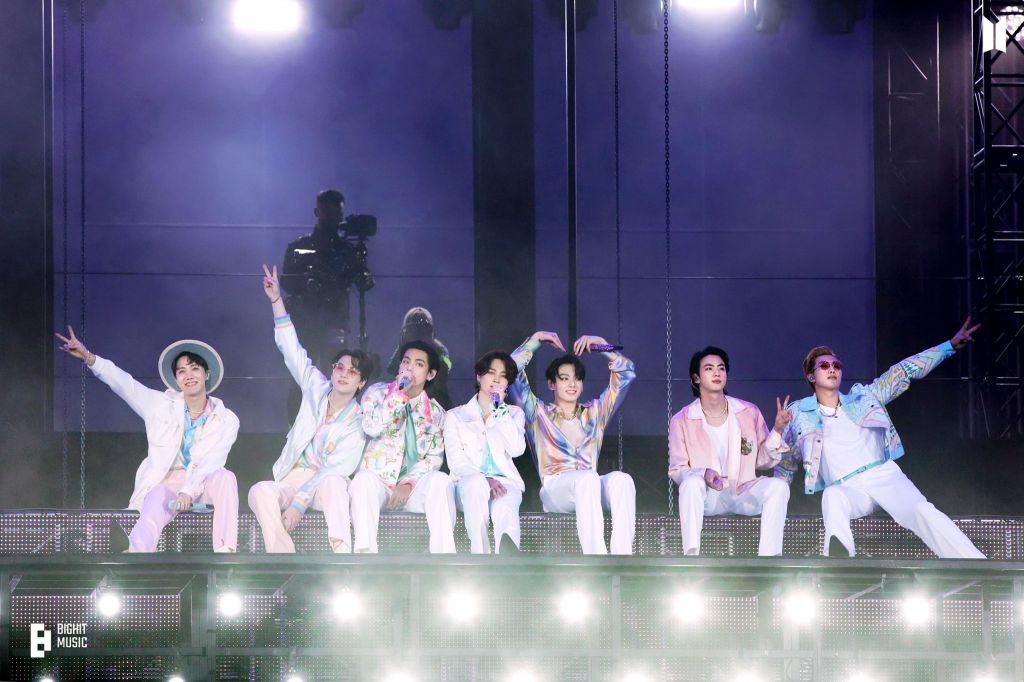
Nevertheless, seven men somehow gained the power to make me smile. Maybe because they had so much more content than AleXa or BLACKPINK, maybe just by chance, but either way, BTS became people I cared about, people who made me happy just by being happy. It’s the same kind of joy I feel when I see my friends laughing together or when I see my brother having fun with his teammates. A deep seated fondness.

I ran away from it when I first realized. It’s scary, the idea that people who are halfway across the world and completely unaware of your existence can affect you emotionally.

But I kept coming back to the fact that they made me happy.

Why should I hide from something that makes me happy and isn’t hurting anyone else? So, I listened to their music, watched their videos, and accepted them into my life. I let them make me happy and let them send their messages to me through music.

Their music isn’t necessarily deeper than other artists, nor is it inherently more meaningful. But because I spent the time looking at lyrics and translations, the messages in the music were more prominent in my mind. With English songs, it’s easy to memorize the words without actually thinking about them, but songs in another language require more attention. Once BTS started releasing songs in English, it was already a habit to read the lyrics and understand the message, so I did spend the time to think about what they were trying to say.

This doesn’t only apply to BTS, by the way. I use them as the example because they’re the first artist I connected to on a level deeper than ‘I like your music’, and because they’re still the artist I connect to the most, but plenty of other artists have a similar effect. Maybe the same phenomenon even happens to non-English speakers when listening to English music.

Aside from lyrics, Kpop astounds me with performances. The synchronization within groups and between artists and backup dancers is astounding, and the choreography is definitely not a walk in the park. I’ve learned a few Kpop dances, and as a non-dancer athlete, it was pretty hard. For me though, the most awe-inspiring aspect of Kpop performances is the staging.

The artists will almost always have a custom or personalized set during performances, whether they’re at large, year-end awards shows or weekly music broadcasts. The background, the outfits, and the concept are all carefully tied together to create exceptional performances. For example, here’s part of a year end performance at the MMAs from 2019 – it’s definitely worth watching.

Kpop performances actually inspired me to think about Entertainment Engineering as a possible track for my education. I think it would be insanely cool to help build the stages and sets that people’s favorite artists perform on. Both designing sets and actually bringing all the crazy ideas to life seem like challenging but rewarding work.

In Kpop, it’s never about just one aspect – of an idol, of a song, of a performance. It’s about both meaningful connections with fans and putting on spectacular performances.

Categories
This is me

This is me: Soccer

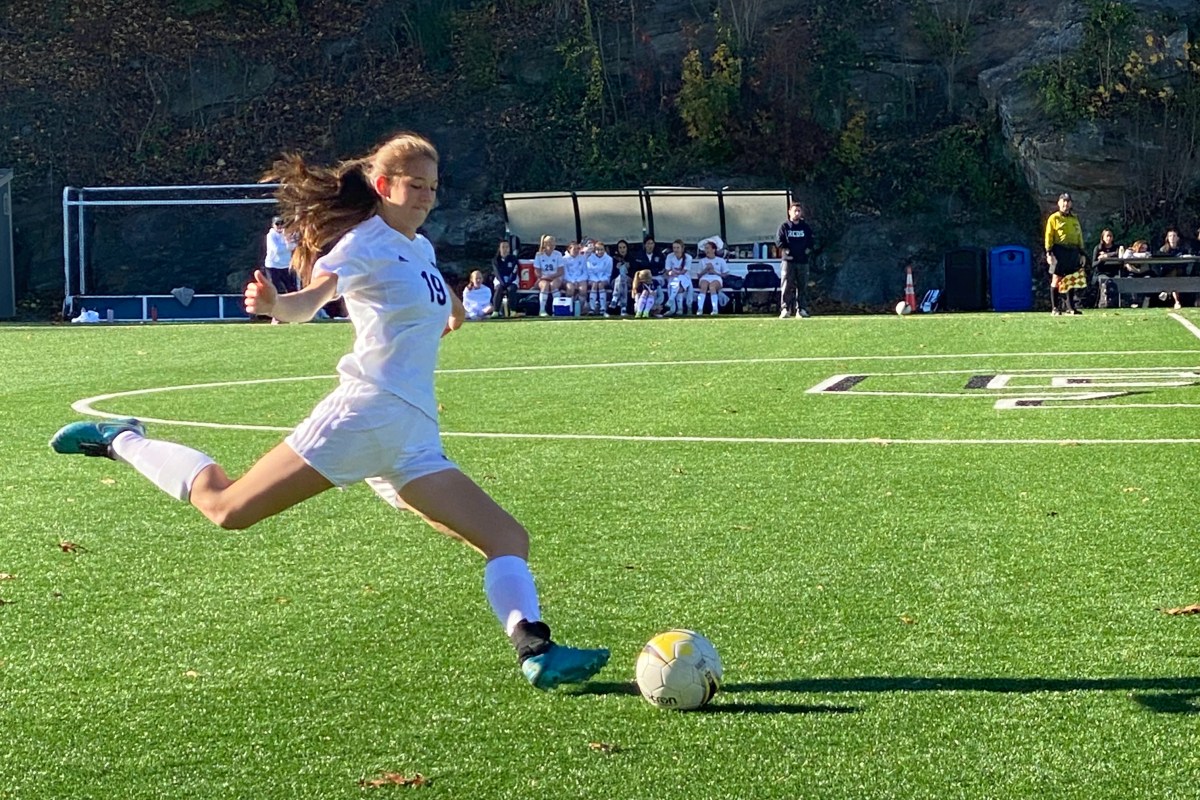
Thinking about soccer is bittersweet for me, as it had been a huge part of my life since I was young, but my memories of the end are tinged with uncomfortness and unhappiness.

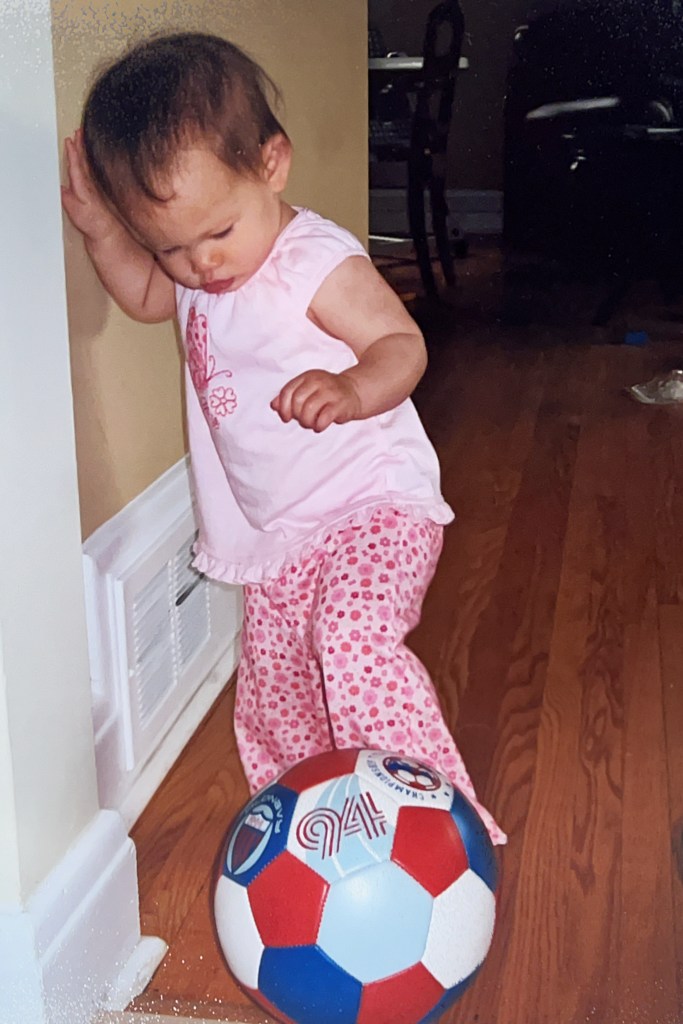
I began playing in a recreational league when I was four or five. It was just a bunch of small children running after the ball, trying to kick it, but I really loved it. When I was eight, I joined my first travel team as a midfielder, eventually switching to center defense. I honestly can’t remember much about my early days of soccer, but evidently I had enough fun to continue for years.

When I was 12ish, it became clear that I had outgrown the small team I was on and I switched to a more advanced regional team. The quality of play was much higher, even though I dropped down to my own age group, rather than playing a year up like I had done on my old team. I was happier with the soccer, definitely, but I was less comfortable with the people. Many of the girls on the team had been playing together since they were little, so it was hard to make friends. Plus, I would hate having to pretend to be interested in what they were talking about.

Our coach was very different from my previous coach, unfortunately not in a way that clicked with me. During games, my coach would stay quiet until we stepped off the field, then explaining what he noticed and telling us how to improve. My new coach would be screaming on the side of the field, trying to get us to listen while we were in the middle of a play. This style of coaching wasn’t compatible with me, as I usually tuned out any sound that wasn’t from the field. It was mainly to reduce distractions from the spectators, but it also blocked my coach’s voice.

After two years on that team, I left. The breaking point was during the winter season when I badly sprained my ankle. I had to drive 45 minutes to practice to sit and watch for a hour and a half before driving 45 minutes back home. This was three times a week and I wasn’t allowed to do homework while sitting on the side. It had definitely been building up for a while – I would dread going to every practice for a few months even before I got injured.

So I took a step back, went back to my old club and played with an okay team for a bit. I definitely needed the break from playing for such a highly competitive team, and this made me enjoy soccer again, though I was frustrated with the low level of play.

After just one season, my mum got a call from one of the parents on my old team (the higher level one) saying that a bunch of the girls were leaving the club and going to a new club. This club was pretty good, competitively, but didn’t have the toxic attitudes or such a burning need to win. So I went and played there – there was good competition, a good coach, and people I was familiar with. It was fun, but after a couple seasons the team kind of broke apart, at least in my eyes. People left because they weren’t satisfied with the level of play, or because they graduated (we were an ’03 and younger team, I’m an ’05), or because they moved. And we got new players, but I never really clicked with them. The majority of the team again starting having conversations that I just didn’t care about – talking about boys from nearby schools that they somehow all knew and gossiping about relationships. It was a perfectly valid thing for teenagers to be talking about, but I was never interested (maybe I should’ve read into that earlier than I did…).

At the end, the team got to the point where I wasn’t friends with 90% of them, and I didn’t even know some of their names. We all played for school during the fall, and when I showed up for some winter practices, there were about 10 people I’d never met. That’s when I stopped playing club soccer.

Although my club soccer journey was pretty tumultuous, school soccer was a lot more peaceful. I played on the middle school team in 7th and 8th grade, then made the varsity team for all four years of high school (to be fair, we weren’t really a sports school). I was friends with a bunch of the team who was one year older, and one of my best friends made the team all four years too, so I was a lot happier in terms of the people. The soccer was okay, not great, but I still had fun. A bunch of my friends also played on the guys’ team, so we would go support each other at home games.

My junior year I hurt my foot pretty badly – I had crutches and a boot. During playoffs, I was in the boot but still wanted to contribute. It’s kind of funny, looking back on it, but we played the number two seed and were tied most of the game. By the end of the game, my ankle was hurting really badly, even with the five Advil and multiple layers of taping on it (kids, don’t play while injured, especially when injured on one of the essential joints for your sport). We ended up losing – I couldn’t really sprint anymore, which left gaps that they took advantage of – but it was really funny when we were walking off the field and I saw the other team’s players, parents, and peers take a double take at the boot I walked off the pitch in (again, DO NOT do this, it is so not healthy).

I was elected as one of the captains my senior year, which was great. On the field, my words held more weight, which helped as my co-captain and I were pretty much the two most experienced players on the team. Off the field, it was a bit rougher, as neither of us were very social, so it was hard to cross the gap to the teammates who weren’t part of our friend group. We made it out fine, in the end.

I haven’t really played in university – maybe I’ll join the recreational league next year, try to replace the bed memories of the end with new, good memories, but honestly, this chapter of my life might be closed. Even though it sucks to give up something I grew up with, it’s not worth it if it doesn’t make me happy anymore.

Categories
This is me

This is me: Taekwondo

Taekwondo surprised me in the best way, somehow blowing open the doors to my heart and quickly settling in to stay. In all honesty, I had expected Taekwondo to be a hobby that was discovered and discarded within a few months, just like so many others, yet it has easily become a major part of my identity.

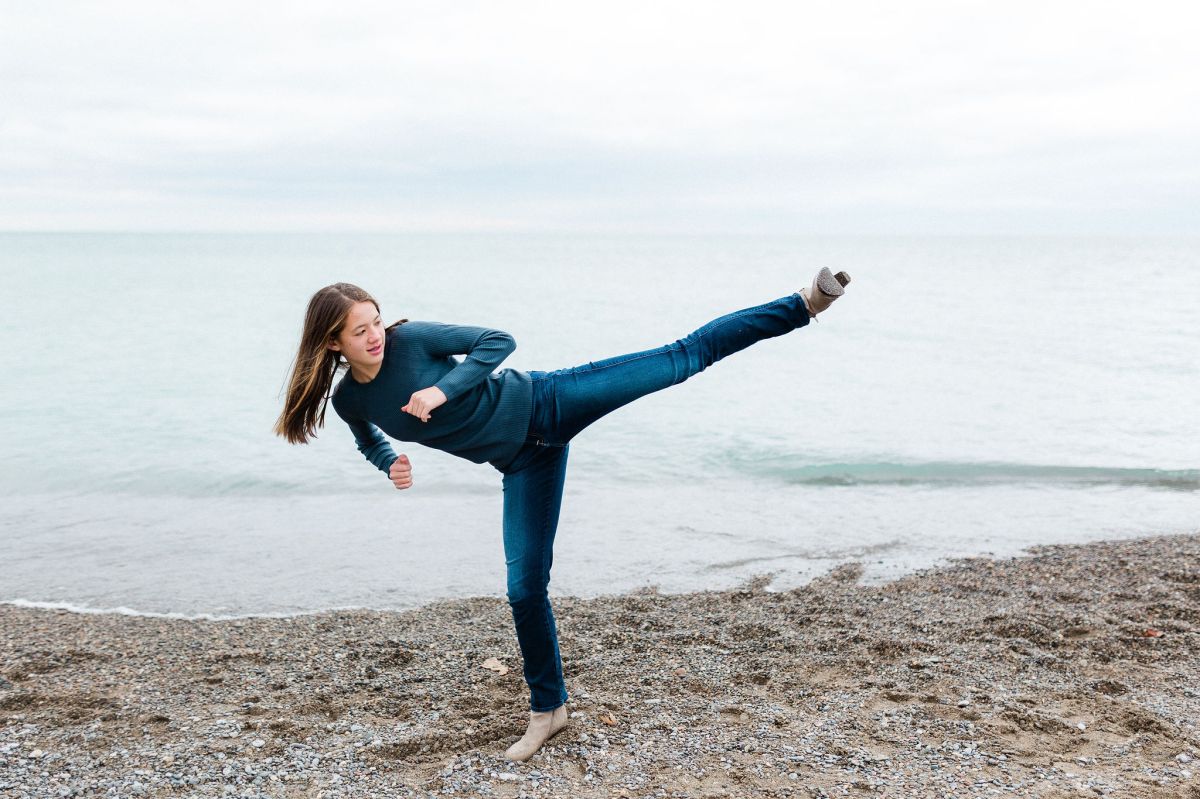
I began Taekwondo in eighth grade – newly teenage and wanting to learn all the cool kicks I saw online. Well, if you didn’t know, they don’t start people at the cool kicks and sequences (gee, I wonder why), they start with basic stances and punches and kicks. The first thing I learned was a horse stance, because in warmups, you sit in horse stance to throw punches. And even though that wasn’t the coolest thing in the world, I was determined to figure it out. The tiny details matter to me – where exactly my hand has to end on a middle punch, the set of my shoulders, the direction my torso faces (fun note for all the math nerds out there: my first thought of how to write this was “the exact direction of the vector normal to my chest”). It was a puzzle and, well, if you’re reading these in order, you know I love puzzles.

So I stuck with it. Horse stance turned to front stance and back stance and sparring stance and, most recently, walking stance. Middle punch turned to high punch turned to low block and the many, many upper body blocks and strikes. And I learned my first kick! A front kick. But that front kick turned into roundhouse kicks and side kicks and hook kicks and back kicks, and before I knew it, I was the person I saw online (not actually though, I usually don’t take videos of myself practicing).

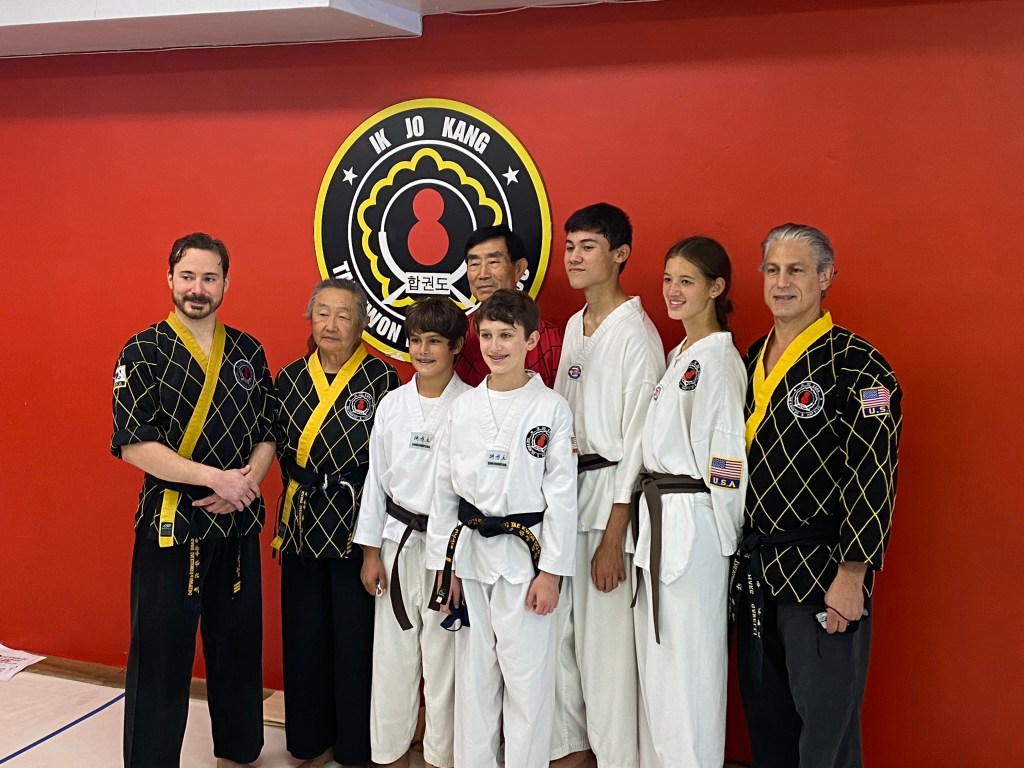
I earned my black belt in 11th grade, three and a half years after I first stepped on the dojang’s mat. Three and a half years of learning forms and movements, of learning to center my soul in my body, of learning to trust my teachers, my peers, and, eventually, myself.

I was, and still am, so incredibly proud of my black belt.

But a black belt isn’t the end of Taekwondo, just like graduating high school isn’t the end of learning. Anyone who says otherwise, to either of those statements, is simply incorrect.

For some people, getting a black belt is achieving their overarching goal, and therefore their road as a Taekwondo practitioner comes to an end. It’s an easy goal to set initially, and then the idea that a black belt is the crowning achievement is reinforced my society outside the martial arts world. No one will say “You’re a second degree black belt” with any more awe than they’d say “You’re a black belt.” After a black belt test is when you can separate the people who did it for the belt and the people who do it for the love of the sport.

Funnily enough, I had to take a break after my black belt test. I loved training, but there was a bit of a ‘too much, too fast’ feeling for me. I had gone from 0 to 100 very quickly, and I hadn’t let up at all. And, to be honest, there was still some of that “black belt is the top” mentality stuck in my head. I had to take a step back and ask myself if I had done it for the belt or if I had done it because I loved it. It was a mix of both, for me, but in the end I realized that even if part of me was going because I wanted a black belt, I still looked forward to, enjoyed, and was happy after every training I went to (what a different experience than the end of my soccer days…).

And now I’m here. I’m in university, training around 15 hours a week with my club team and helping the club as an Assistant Instructor. I earned my second degree through a grueling five hour test this past May. I’ve met amazing people and made incredible friends through the club, relationships that I know will last past graduation. So far, taekwondo has been a defining factor of my college experience.

And to think, it’s all because 13 year-old Sydney wanted to learn some cool kicks.